
A vibecoder livestreamed an AI agent army to solve P vs NP: the million-dollar problem no one has cracked in 55 years
Vũ Khôi
Tác giả tại Wotech Electronics Blog
A vibecoder livestreamed an AI agent army to solve P vs NP: the million-dollar problem no one has cracked in 55 years
A strange livestream is under way: instead of a mathematician spending decades on a proof, a vibecoder has mobilised an entire army of AI agents to attack the P vs NP problem — and is broadcasting the whole process live for everyone to watch.
Quick answer: P vs NP is one of the seven Clay Millennium Prize Problems, carrying a $1 million reward for a valid solution, and it has resisted the world's best minds for 55 years. A vibecoder has now opened a livestream at pequalnp.com/live, sending a whole fleet of AI agents against the problem — with a public dashboard tracking every lemma and every Lean verification. At the moment of the screenshot: 1,015 lemmas, 465 checked, 5 refuted, 125 agents running. This is not a solution; it is a completely new way of doing mathematics: public, continuous, and machine-checked step by step. What matters is not whether the AI fleet solves it, but how it turns a 55-year-old problem into a process you can watch live, hour by hour.
P vs NP is the foundational question of computer science: if an answer can be checked quickly, can it also be found quickly? In technical terms, P is the set of problems solvable in polynomial time, while NP is the set of problems whose correct answers can be verified in polynomial time — and the question is whether the two sets coincide. The problem was laid down by Stephen Cook and Leonid Levin in 1971, and 55 years later, it still has no answer.
What is this AI army actually doing on the livestream?
According to the post by Hỏi Dân IT Official on 23 November 2026, the organiser — described as a "vibecoder" — is not proving anything himself. Instead, he coordinates a fleet of AI agents working together, and streams the process live on pequalnp.com/live. The "Live fleet viewer" dashboard shows the scale of the campaign at the moment of the screenshot:
- 1,015 lemmas in the system, of which 465 have been checked, 5 refuted, and 0 ruled dead.
- 5,414 agent sessions so far, 125 agents working at the same time, 30 "mastermind seats", and 2,286 messages exchanged that day.
- The Lean proof checker had just accepted lemma L-meta-192; in the previous hour alone, 26 lemmas were accepted and 0 rejected.
The fleet is attacking the problem along two classic research routes, shown right on the dashboard: "Circuit Lower Bounds via Algorithms" (code L-clb-036) and "Proof Complexity" (code L-pcx-071). These are the two traditional approaches mathematicians use against P vs NP: one tries to prove that certain problems require circuits too large to be simplified, the other studies whether short proofs can exist at all.
The most remarkable thing is not the numbers, but how the work is organised. As pequalnp.com states, the current verdict is still "open" — no solution; the fleet is aiming at both possibilities, P ≠ NP or P = NP; and the "weight" shown on the page is only the count of checked lemmas pointing at each answer — not a probability, and certainly not a proof. Every line on the page is a structured record of the fleet: a lemma stated, an attempt begun or dead, a verdict from the checker. No line is an agent's own account of itself.
Why has P vs NP resisted solution for 55 years?
P vs NP is hard not for lack of brilliant people, but because the question sits at the edge of what current mathematics can reach. Most experts believe the answer is P ≠ NP — that there are problems whose answers are easy to check but inherently hard to find. But "believing" is not proving: to conclude P ≠ NP, one must prove that no fast algorithm exists for any NP-complete problem — a claim covering the entire space of possible algorithms, and that is exactly where 55 years of effort have stalled.
Solving P vs NP would reshape the foundations of computer science, as the original post stresses: from optimisation algorithms, logistics and drug discovery to cryptography. Most modern encryption rests on the assumption that some problems are hard to solve but easy to check; a proof that P = NP would shake that foundation. Conversely, a proof of P ≠ NP would formally set limits on what computers can do efficiently — a result as philosophically significant as it is practical.
That is why every claim of "almost solving P vs NP" in history has had to pass through the same gate: publication, independent peer review, and, under the Clay Institute's rules, a two-year waiting period before the $1 million prize is awarded. A livestream, however impressive, is only the starting point of that journey.
How is this livestream different from a giant group meeting?
This is the grounded judgement the original post's author offers — and the point that makes the story worth reading beyond a sensational headline. The author writes, with a mix of curiosity and scepticism: "Nobody knows yet whether the AI army will make history, or whether it is just organising a large-scale group meeting so everyone can be stuck together." But in the next breath, the author admits: "the sight of a vibecoder livestreaming AI to conquer a million-dollar problem is enough to show how strange this era has become."
Both halves are true, and they do not contradict each other. Mathematically, nothing has changed: not one of the 465 "checked" lemmas means the problem is solved, and the verdict on the page remains "open". But in terms of how the work is done, the livestream represents a real change: the problem is being attacked in public, continuously, with every step machine-checked and recorded — instead of sitting in a small group's private drafts for years before publication.
| Aspect | Traditional mathematics | The AI livestream fleet | How to read it |
|---|---|---|---|
| Who works | A few mathematicians, over many years | 125 agents running in parallel, 5,414 sessions | Bigger scale, but volume cannot replace a breakthrough idea |
| Verification | Closed peer review, slow, after publication | Lean accepts or rejects each lemma by the hour, in public | Faster and more transparent — but "accepted" only means that lemma is correct, not that the whole problem is done |
| Transparency | Drafts shared only when complete | Live dashboard: every lemma, every refutation visible | Outsiders can follow an attempt on a great problem in real time for the first time |
| Measure of progress | A theorem recognised by the community | Number of lemmas checked, sessions, messages | The easiest place to be fooled: being busy is not the same as getting closer to the answer |
| Biggest weakness | Slow, few people, easy to miss a direction | Easy to run fast in the wrong direction; 5 lemmas already refuted is the evidence | "Ruled dead" is not a failure — it is a feature: killing wrong directions early is the point |
What makes this model worth watching is not the promise of solving the problem, but its verification infrastructure. Lean — the machine proof checker the fleet uses — is from the same family of tools mathematicians recently used to verify the claimed proof of the Riemann Hypothesis. When Lean "accepts" a lemma, it has passed a machine check; it is no longer a bare assertion. The remaining question is whether thousands of correct lemmas can be assembled into one complete proof — and no dashboard can answer that for us.
How to judge a claim that "AI is about to solve a big problem"?
The P vs NP livestream will not be the last claim of this kind we see. The checklist below — drawn directly from how the P = NP fleet organises its work — helps readers judge any similar claim for themselves, instead of trusting the headline:
- Who verifies it, and with what? A claim has weight when an independent checker — like Lean — confirms each step, rather than resting on the claimant's word alone.
- Distinguish "checked" from "proved". A checked lemma is one correct step; a complete proof is the whole chain assembled without gaps. The two are very far apart.
- Look at the refutations, not only the successes. A transparent project publishes its refuted lemmas and ruled-dead directions too — that is a sign of a scientific process, not a demerit.
- Do not confuse activity metrics with progress. Agent sessions, messages and hours run measure activity; real progress is measured only by claims that have been verified and still stand after scrutiny.
- Wait for independent review. A result only becomes a result when the expert community can check it — and for the Clay prize, that process takes at least two years.
Frequently asked questions
What is P vs NP, in short?
P vs NP asks: if an answer can be checked quickly, can it also be found quickly? P is the set of problems that can be solved fast; NP is the set whose correct answers can be verified fast. The problem asks whether the two sets coincide — and no one has answered it in 55 years.
Would solving P vs NP really pay $1 million?
Yes, for a valid solution. P vs NP is one of the Clay Institute's seven Millennium Prize Problems, each worth $1 million. But the solution must be published, survive independent review, and wait out a two-year assessment period under the Institute's rules — so even if the AI fleet claimed a solution today, the road to the prize would still be long.
Does 465 "checked" lemmas mean they are close to finishing?
No. "Checked" means each individual lemma has passed Lean's verification. A complete proof needs hundreds or thousands of correct steps assembled into a gap-free chain — and so far, the official verdict on pequalnp.com remains "open", meaning no solution exists yet.
What is Lean, and why does "accepted" matter?
Lean is a machine proof checker: instead of humans reading and trusting each step of reasoning, Lean verifies correctness formally. When Lean "accepts" a lemma, that step is correct by machine standards — no longer a bare assertion. It belongs to the same family of tools recently used to verify the claimed proof of the Riemann Hypothesis.
Where can I watch the P vs NP livestream?
At pequalnp.com/live — a public dashboard, updated in real time, showing the lemma count, the agents currently running, and the status of each line of attack, such as circuit lower bounds and proof complexity.
Why do most experts believe P ≠ NP?
Because after 55 years, every attempt to find a fast algorithm for NP-complete problems has failed, while the structure of these problems suggests an intrinsic hardness. Even so, this remains a majority belief — not a proof — and turning that belief into a proof is precisely what makes the problem worth $1 million.
Source: the post by Hỏi Dân IT Official (23 November 2026) and public data at pequalnp.com/live. Dashboard figures (1,015 lemmas, 465 checked, 125 agents running) are a snapshot taken at the time of the post — the live numbers change continuously in real time.
Bài viết liên quan

23 tháng 11, 2026 · 8 phut doc
AI agents delete before asking: GEARVN's 20-scenario test, one instruction brings errors to zero
Letting an AI agent check stock or create a ticket is fine — letting it delete on its own is not. GEARVN AI Lab just tested 20 Vietnamese scenarios on three models, and the result shows the safety li…
23 tháng 11, 2026 · 10 phut doc
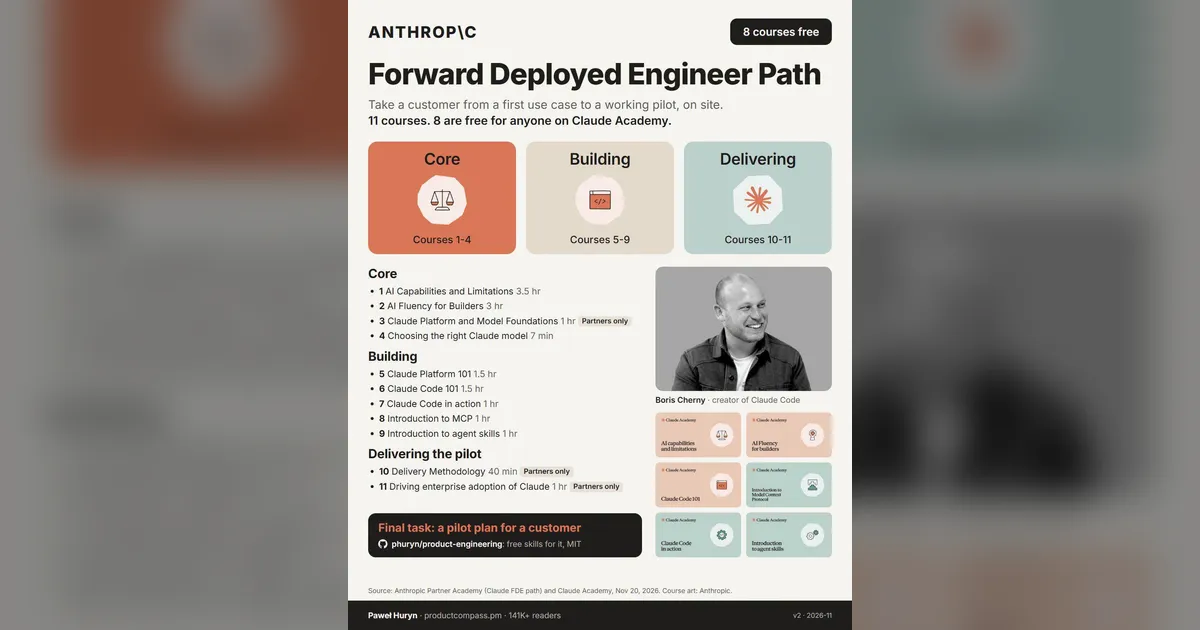
Anthropic launches Forward Deployed Engineer path: 11 courses, 8 free — no coding required
Anthropic has just announced a new learning path for people who work directly with customers: Forward Deployed Engineer. What makes this path worth noticing is not the number of courses, but the entr…
23 tháng 11, 2026 · 8 phut doc
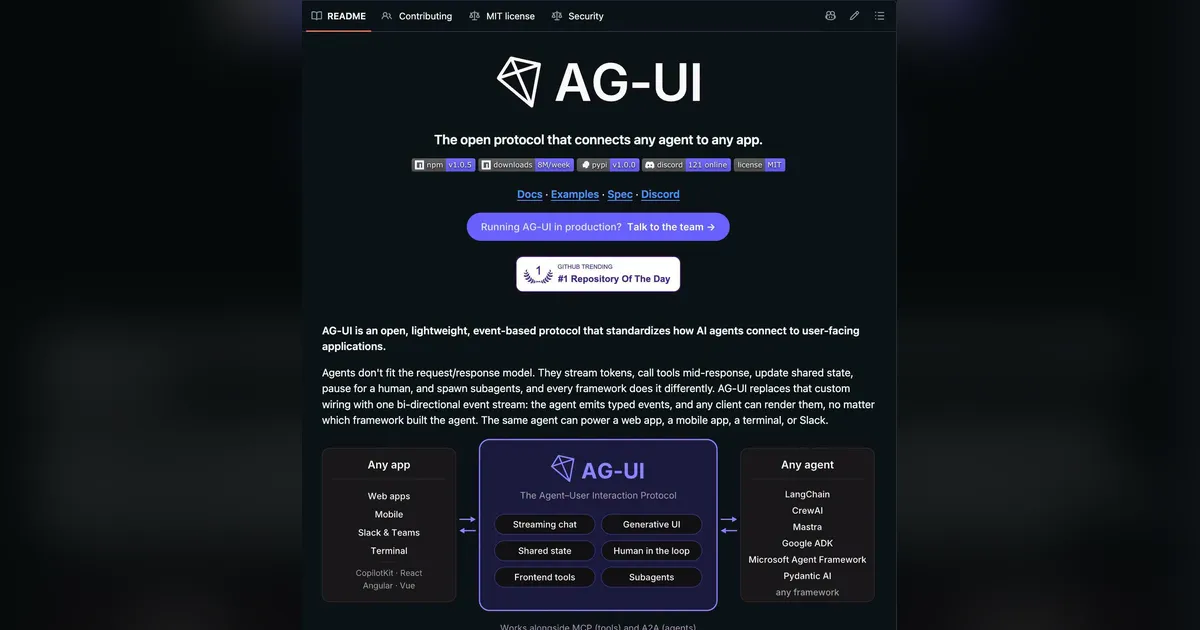
AG-UI hits 1.0: the open protocol that lets AI agents talk to your app
An AI agent does not work in question-and-answer mode. It answers while calling tools, pauses to wait for the user, and sometimes hands work to subagents — and every framework handles those moments d…